Slipped, cracked or missing slates
Individual slates can usually be replaced without redoing the roof. The sooner it is done, the less water gets in.
Few roofs look as good or last as long as slate. We work with both authentic natural slate and synthetic slate, so you can choose the look, weight and budget that fit your home. We start with a free inspection and tell you honestly which one makes sense.
Overview
Natural slate is split from quarried stone, and it is one of the longest-lasting roofing materials there is. Well-installed slate roofs are commonly described as lasting 75 to 100 years or more, and many historic buildings still carry their original slate. Virginia has a long slate tradition, including the quarries of central Virginia, so slate is part of the look of many older homes, churches and estates in the region.
Synthetic slate is a manufactured alternative made from polymer, rubber or composite materials and molded to look like natural slate. It is lighter and usually costs less to buy and install. Most manufacturers describe lifespans of several decades rather than a century, and many products carry strong impact and fire ratings. Which one is right depends on your house, your budget and how long you plan to stay.
Slate is also a specialty skill. The stone is brittle, the fasteners and flashing matter as much as the slate itself, and walking on a slate roof the wrong way breaks it. We take that seriously, whether the job is a small porch roof, a dormer, a repair to a roof that is mostly sound, or a full replacement.
Warning signs
Individual slates can usually be replaced without redoing the roof. The sooner it is done, the less water gets in.
On many older roofs the nails fail long before the slate does. Slates that slide down a few inches are a common sign.
Some slate softens with age. When slate flakes in layers or turns to powder, patching may stop making sense.
Chimneys, valleys, dormers and walls are where slate roofs usually leak. Flashing can often be repaired or replaced on its own.
Hail, branches and foot traffic can crack slates that look fine from the ground. A close inspection is worth doing.
Options
We can talk you through both and give you an honest recommendation.
From Stonewall projects
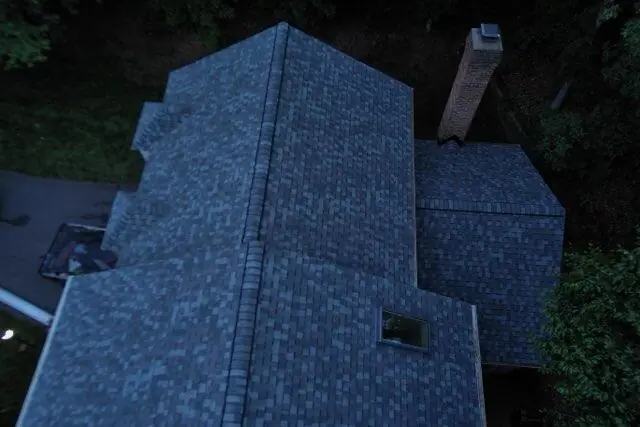
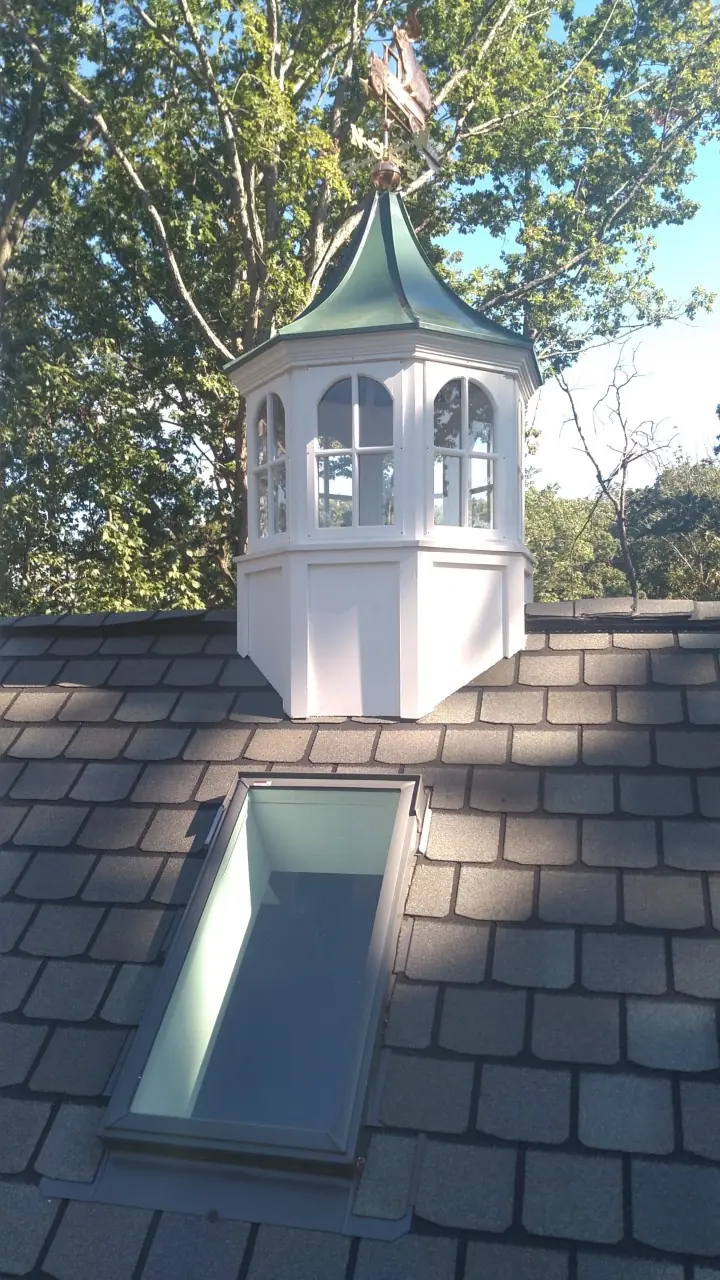
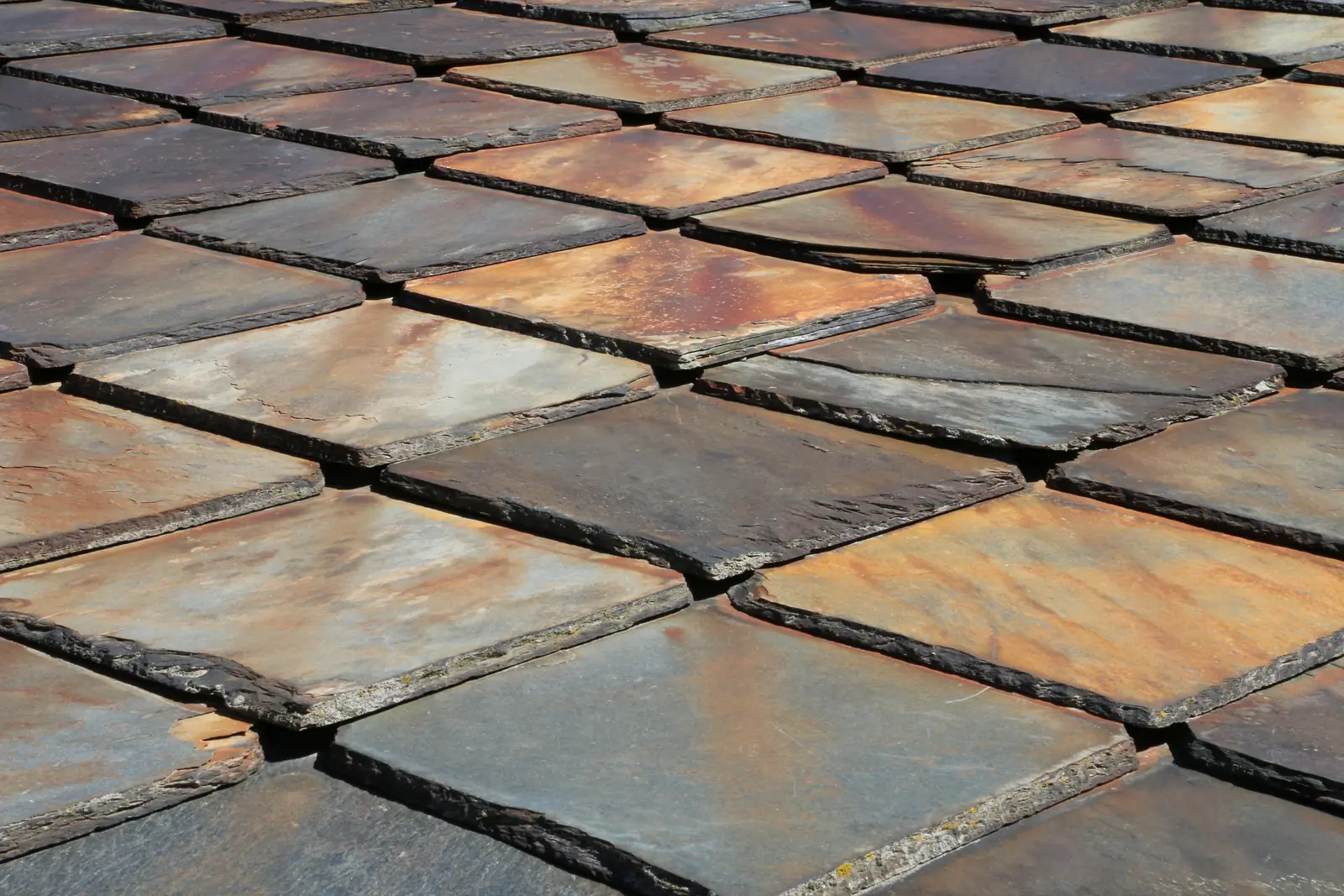
Top photo: natural slate roof by Øyvind Holmstad, via Wikimedia Commons, licensed CC BY-SA 4.0. It is an example of the material, not a Stonewall project. The other photos are Stonewall projects with slate-style shingles, shown for the color and look; they are not natural slate.
See all slate roofing photosHow it works
We look at the roof and the areas around it, and talk through what we find before anything is priced.
We look at the decking and framing, because natural slate is heavy and the roof has to be able to carry it.
You get a free estimate that lays out authentic slate, synthetic slate, or repair, whichever applies.
Slate goes on with corrosion-resistant fasteners and properly detailed flashing, and the finished roof gets a final walk-through.
Honest considerations
Questions
Yes. We work with authentic natural slate and with synthetic slate, and we will help you choose between them.
Well-installed natural slate is commonly described as lasting 75 to 100 years or more, and the nails and flashing often wear out before the slate. Synthetic slate lifespans vary by product, and manufacturers typically quote decades.
Often, yes. Slipped, cracked or missing slates and failing flashing can usually be repaired. If the slate itself is flaking or the roof is failing across the board, we will tell you that honestly.
Natural slate is heavy, so we check the structure first. If it cannot carry real slate, synthetic slate is the lighter alternative.
For many homeowners who plan to stay, a roof that can last generations is worth a higher price. If you will move in a few years, a different material may make more sense. We will give you an honest opinion.
Inspections and estimates are free. Tell us what you are seeing, or call and talk to someone now.