Start with how widespread the problem is
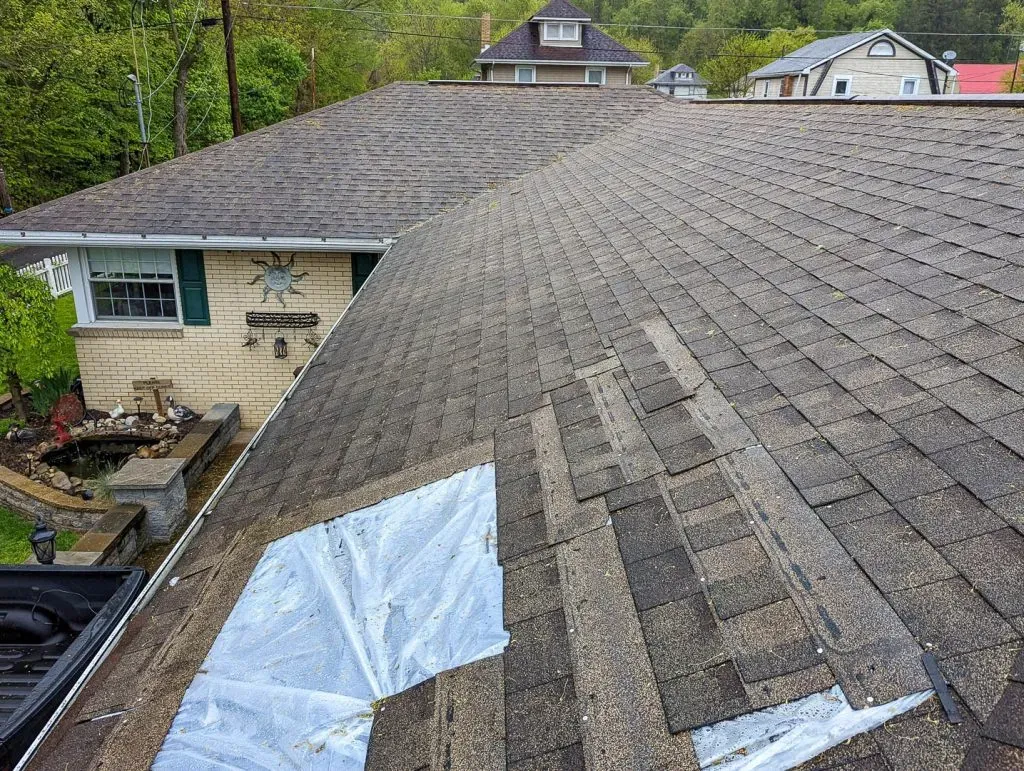
A single missing shingle, a cracked pipe boot or a failed piece of flashing is a repair. The roof around it is doing its job, and fixing the one weak point solves the problem.
If shingles are curling, cracking or losing granules across the roof, or the same area keeps leaking after being repaired, you are looking at a roof that is wearing out as a whole. More patches will cost money without solving it.
Consider the age and the material
Asphalt shingle roofs are typically designed to last roughly 20 to 30 years, and metal roofs commonly 40 to 70 years or more. Age alone does not decide it, but a roof near the end of its expected life that needs a repair is a reason to plan for replacement.
Ask the roofer how much of the roof’s life is left, and what they based that on.
What a good inspection covers
Before recommending either option, a roofer should look at more than the damaged spot.
- The roof surface: shingle or panel condition, fastening, and damage
- Flashing around chimneys, skylights, vents and wall junctions
- Valleys, edges and eaves where water concentrates
- The attic or ceiling below, where accessible, for signs of water
- The decking, if any is exposed or soft
Ask for the reasoning
A good contractor explains why they recommend repair or replacement, shows you what they found, and does not push you to the more expensive option. If the answer does not make sense, get a second opinion.
Common questions
Is it cheaper to repair or replace a roof?
A repair costs less up front. If the roof is failing in many places, repeated repairs can add up to more than a replacement would have cost.
Can a leaking roof be repaired?
Often yes. Many leaks come from a single failed detail such as flashing. Finding the actual entry point is the key.
Inspections and estimates are free. We will tell you what we find, including when nothing needs doing.